
Research figure template
Neuron Labeled Diagram
Make a clear labeled neuron diagram for anatomy, signaling, neuroscience research, and education.
Create a custom diagram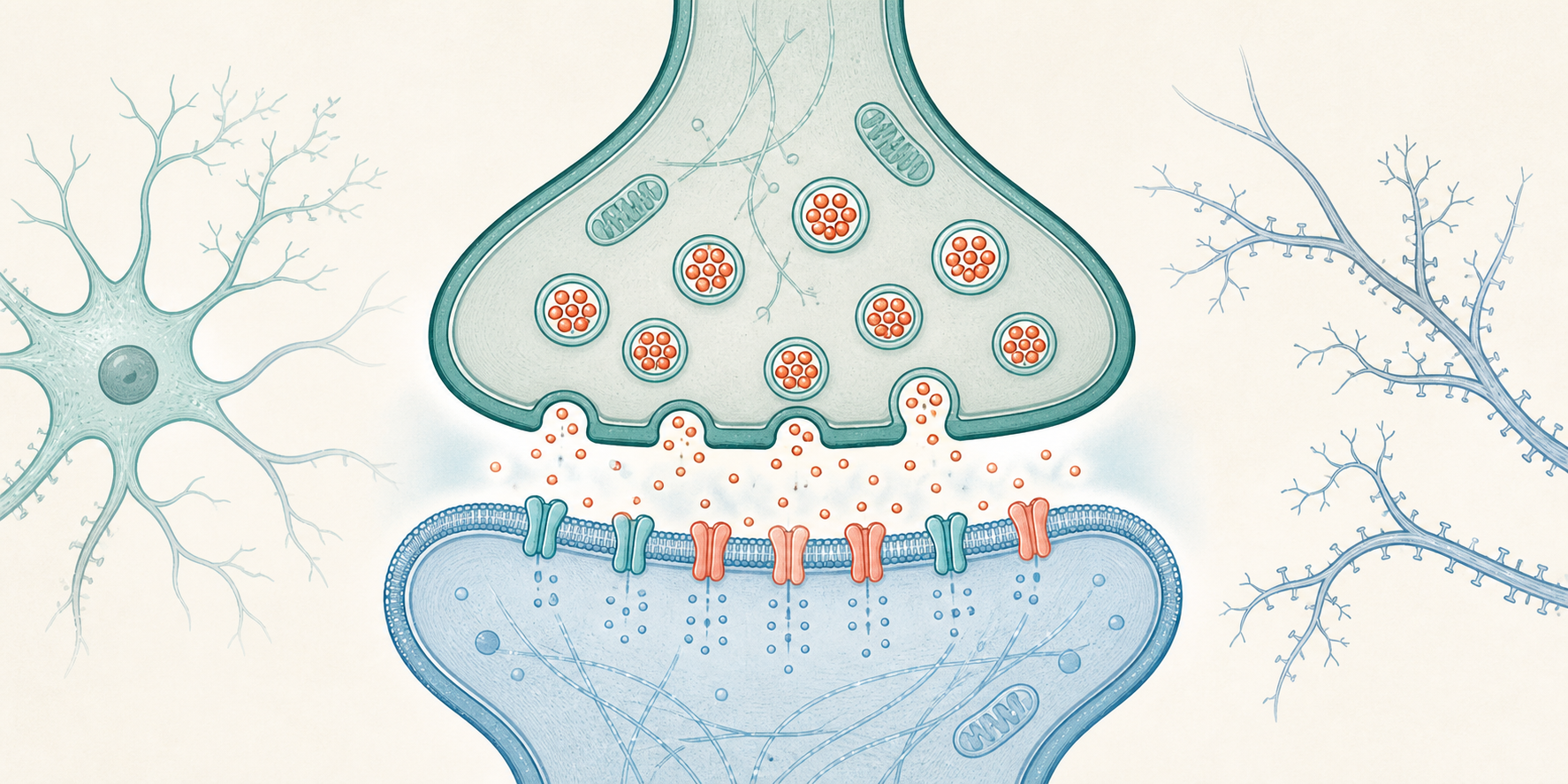
Research figure template
Make a clear labeled neuron diagram for anatomy, signaling, neuroscience research, and education.
Create a custom diagramA neuron labeled diagram should establish the direction from dendrites and soma through the axon to the synaptic terminals. The silhouette gives the reader a fast overview, while labels identify the structures needed for the research question. Add myelin, nodes, neurotransmitters, or a synapse when they explain the process; avoid filling the drawing with terms that do not support the point of the figure.
Choose whether the figure explains anatomy, action-potential movement, synaptic transmission, or a comparison between neuron states. Place the main cell body first, establish an axon direction, and then add callouts that do not cross the silhouette. For a signaling story, compare the neuron page with the graphical abstract maker and use the generator for a custom starting composition.
Write the one-sentence claim first, then list the structures and terms that must appear. Keep the main subject stable and use short labels with consistent leader lines.
Use a flow layout for change over time, callouts for component identification, and comparison panels for conditions. Add a sketch when the composition matters, then explore variations in the scientific diagram maker.
Do not let leader lines cross the neuron or make all labels the same visual weight. Check the direction of signal flow, distinguish axon from dendrites, and verify that the image does not imply that every neuron has the same morphology.
Yes. Specify dendrites, soma, axon, myelin, nodes, or terminals as needed for the figure.
Yes. Describe the pre-synaptic terminal, cleft, receptors, and direction of the signal, then review the result.
Yes. Adjust the number of labels and terminology for the audience and check the biology.
Yes. A sketch can guide the silhouette, signal direction, and callout positions.
Always. Check morphology, labels, signal direction, and any claim about the mechanism.
Start with the structure or process you need, add a prompt, sketch, or reference image, and use SciDrawer to create a research figure starting point you can refine.
Open the AI figure generatorExplore more focused research figure pages, browse editable templates, or open the generator for a custom draft.